Testimonials and Feeback
Review of The Hardest Bridge event – Downe House – Friday 6 February
On Friday 6th February in the evening, Downe House students had the opportunity to attend a rare and deeply challenging event; a screening of The Hardest Bridge, followed by a discussion with
its central contributor, Jo Berry CBE, and executive producer Howard Grace. The event was open to all Politics, History and Religious Studies students from L5 to U6 as well as members from the local community, and encouraged thoughtful engagement with direct issues of conflict, forgiveness and reconciliation.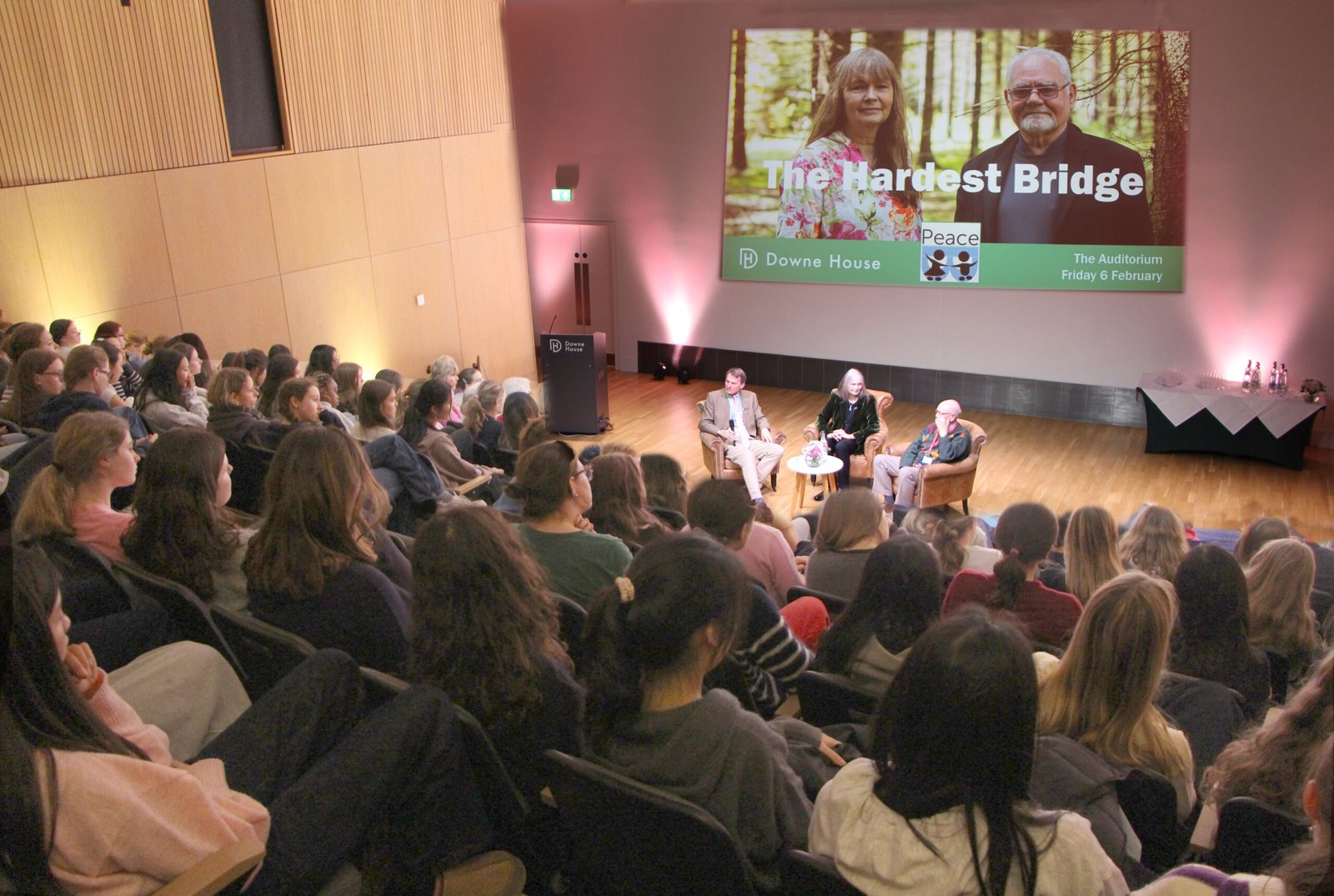
Ahead of the screening, we were fortunate to join Jo Berry and Howard Grace for dinner. This allowed for conversation about the themes of the film and the importance of creating space for difficult discussions in schools. At the start of the event, I delivered a short welcome address before Howard Grace introduced the documentary and spoke briefly about its production and purpose, highlighting the ongoing conflict that the director Dr Imad Karam, award-winning British-Palestinian film maker faced when creating the documentary due to the loss of loved ones in Gaza. The Hardest Bridge tells the extraordinary story of Jo Berry, whose father, Sir Anthony Berry MP, was killed in the 1984 IRA Brighton bombing, and Patrick Magee, the IRA member responsible for planting the bomb. The film documents their journey towards dialogue and understanding, challenging conventional narratives of justice, blame and forgiveness. Watching the screening together as a school community was an intense and emotional experience, prompting both silence and reflection among the audience.
Afterwards, Jo Berry answered questions from students with remarkable openness. She spoke about her decision to engage in dialogue with Patrick Magee, the criticisms she has faced, and the realities of reconciliation as an ongoing, often uncomfortable process rather than a single moment of forgiveness. Her responses encouraged students to think critically about justice, accountability and whether empathy has a role in political conflict. Jo’s visit also had a strong personal connection to the school which we found out more about over dinner. She shared that the last time she had been at Downe House was to inform her younger sister, who was then a boarder, of their father’s death.
This connection gave her return an added emotional significance and reinforced the personal nature of the evening.
Although the events explored in the film occurred decades ago, the ideas discussed felt highly relevant. In a world marked by conflict, the evening prompted students to consider how dialogue might be used to break cycles of violence. The event was not easy to watch, but it was precisely this discomfort that made it such a valuable experience for those who attended; it was an amazing evening.
Downe House school, Sixth Form student.